|
What Is Dementia? Dementia, also called major neurocognitive disorder, isn’t a disease. It's a group of symptoms caused by other conditions.
Dementia is an umbrella term for a loss of thinking ability that affects your ability to function in daily life. (Photo Credit: iStock/Getty Images) Dementia is a broad term for loss of thinking ability that’s severe enough to interfere with your daily life. Thinking abilities include things such as memory, language skills, problem-solving, visual perception, self-management, and your ability to focus and pay attention. About 5%-8% of people over age 65 have some form of dementia. This percentage doubles every 5 years after 65. As many as half of people in their 80s have some loss of thinking ability. Dementia vs. Alzheimer's Alzheimer's disease is the most common cause of dementia. About 70%-80% of people with dementia have it. But there are as many as 50 other causes of dementia. Dementia symptoms may improve with treatment. But many of the diseases that cause dementia aren't curable. Dementia vs. delirium Delirium is a sudden severe change in your brain function. Much like dementia, it causes confusion, disorientation, and problems with thinking and memory. Delirium typically comes on quickly, within 1-2 days. Dementia comes on much more slowly, over months and years. Delirium can look different in different people. Some people become drowsy and withdraw. Others are agitated and distressed. With delirium, you can be: Hyperactive (too active) Hypoactive (not active enough) Mixed, where a person may change from one type to another during the course of a day While dementia symptoms tend to stay consistent, delirium symptoms can change, even from one hour to the next. Most importantly, you can treat delirium, whereas dementia gets steadily worse over time. Dementia vs. amnesia Amnesia is the loss of memories, experiences, and facts about your life. There are different kinds of amnesia, including short-lived (global transient amnesia), mental-health related (dissociative amnesia), and injury-related (posttraumatic amnesia). You can have amnesia that prevents you from remembering your past or amnesia that keeps you from forming new memories. Amnesia can be caused by a stroke, injury, infection, long-term alcohol use, tumors, or seizures. Sometimes amnesia can happen as a result of Alzheimer’s, which makes it harder to tell the difference between the two. But amnesia and dementia aren’t the same thing.
Although dementia includes memory loss, you also have other problems with thinking that lead to a decline in daily functioning such as language problems, lapses in judgment, and vision problems. Dementia vs. normal aging Many people (about 40%) have at least some degree of memory loss as a normal part of aging. As you age, there are slow changes to both your body and brain. For instance, you may lose some of your neurons (nerve cells that send messages throughout your body) as you get older. For most people, memory loss doesn't affect your ability to live day-to-day or remain independent. A small degree of memory loss is known as age-associated memory impairment, and it causes memory problems that: Don't disrupt your daily life Don't affect your ability to complete your normal tasks Don't affect your ability to learn or remember new things Aren't caused by an underlying medical condition A small percentage of people will develop dementia as they get older. Unlike those with normal aging, people with dementia have memory loss that gets worse over time until they aren't able to take care of themselves. Dementia CausesDementia is caused by damage to your brain cells, which can stop them from sending messages to one another. When your brain cells can't communicate, it can make it hard for you to think and feel, and it may change your behavior. Your brain has several regions that control different functions of your body. For instance, your cerebrum controls movement, body temperature, speech, thinking, reasoning, problem-solving, and emotions, among other things. When your brain cells are damaged in a specific part of your brain, that region can't control your body the way it should. The most common causes of dementia include: Other less common causes include: Huntington's disease Leukoencephalopathies, diseases that affect the deeper, white-matter brain tissue Creutzfeldt-Jakob disease, a rare and fatal condition that destroys brain tissue Some cases of multiple sclerosis (MS) or amyotrophic lateral sclerosis (ALS) Multiple-system atrophy, a group of degenerative brain diseases that affect speech, movement, and autonomic function Infections such as late-stage syphilis
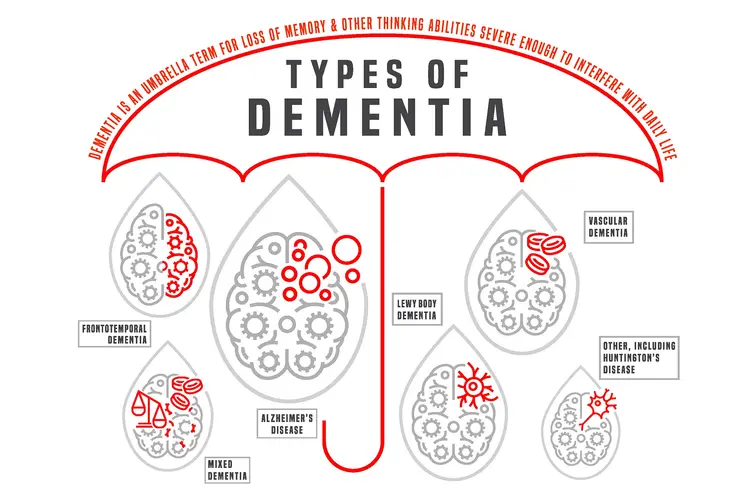
Although all types of dementia are progressive, the term progressive dementia refers to dementias that happen rapidly, over the course of weeks or months. Rapidly progressive dementia might happen because of: Sometimes certain disorders that cause dementia run in families, which can be considered inherited dementia. How common is dementia? Dementia affects millions of people worldwide. It gets much more common with age. About one-third of people aged 85 and older have dementia. Types of DementiaSeveral underlying medical conditions can cause damage that leads to dementia, including: Alzheimer's disease This is the most common cause of dementia. In people with Alzheimer's, pieces of a protein called amyloid cluster together to form plaques between their brain cells, and another protein called tau forms tangles inside their nerve cells. These proteins often start in the hippocampus, which is an area of your brain that controls how you form memories. Over time, the plaques and tangles spread throughout the brain, leading to increased memory loss and trouble thinking. Eventually, individuals lose the ability to communicate and become dependent on others for their daily care. Currently, some medicines can slow the progression of Alzheimer's, but no treatment can completely stop the process or reverse it. Vascular dementia Vascular contributions to cognitive impairment and dementia (VCID) is caused by the same risk factors that increase your risk for stroke, such as atrial fibrillation, high blood pressure, diabetes, and high cholesterol. Your symptoms will depend on where you have blood circulation problems in your brain as well as how big they are and how many you have. There are several forms of VCID, including: Vascular dementia Vascular cognitive impairment Poststroke dementia Multi-infarct dementia Cerebral autosomal dominant arteriopathy with subcortical infarcts and leukoencephalopathy (CADASIL) Subcortical vascular dementia (Binswanger's disease) Cerebral amyloid angiopathy Lewy body dementia (LBD)
After Alzheimer's and vascular causes, LBD is the next most common cause of dementia. It's caused by balloon-like clumps of abnormal proteins called Lewy bodies, which form in your nerve cells. People with LBD have problems with their thinking, behavior, body, and sleep. There are a couple of different types of LBD, including: Dementia with Lewy bodies (DLB) Parkinson's disease dementia (PDD) Frontotemporal disorders (FTD) This is a group of neurodegenerative brain disorders that primarily affect the frontal and temporal lobes of your brain. Your frontal lobe partly controls your personality, decision-making, movement, and ability to smell and speak. Changes in this region of your brain would affect your ability to reason, make decisions, prioritize, multitask, act appropriately, and control movement. Your temporal lobe partly controls your short-term memory, speech, musical rhythm, and some of your ability to smell. Changes in this region of your brain affect your memory and your ability to understand the words that you hear, recognize things you've seen, and identify and respond to your emotions. There are no treatments for curing or reversing FTD. The symptoms of FTD differ among people based on which area of the brain the disorder affects. There are several forms of FTD, including:
Other neurodegenerative diseases and conditions that have dementia or dementia-like symptoms include: Some reversible causes of dementia-like symptoms include: Alcohol or substance use disorder Side effects of some medications Tumors Subdural hematomas, blood clots beneath the outer covering of the brain Normal-pressure hydrocephalus, a buildup of fluid in the brain Metabolic disorders, such as a vitamin B12 deficiency Low levels of thyroid hormones, called hypothyroidism Low blood sugar, called hypoglycemia Vasculitis (inflammation of the blood vessels in your brain) Chronic infections Mixed dementia Some people live with more than one type of dementia at a time. This is called mixed dementia. The most common combination is vascular dementia and Alzheimer’s disease. Mixed dementia has no specific set of symptoms. The symptoms you have will depend on the types of dementia you have. Typically when two types are combined, it makes the symptoms of each type worse than they would be alone. Risk Factors for DementiaCertain physical and lifestyle factors can raise your chances of dementia, including: Benadryl and dementia Benadryl belongs to a class of medicines called anticholinergics. Anticholinergics block a chemical called acetylcholine, which helps transmit messages in your nervous system. Anticholinergic drugs include antihistamines (such as Benadryl), tricyclic antidepressants, and medicines for overactive bladder and Parkinson's disease. Anticholinergic drugs have been linked to an increased risk of developing dementia. They probably don't directly cause dementia, but studies show that their long-term use may increase your risk of developing dementia. If you use an anticholinergic drug such as Benadryl, talk to your doctor about whether you should limit your use or change your medication. Dementia Symptoms People with dementia have problems with thinking and remembering things, which affects their ability to manage their daily lives. Some signs to watch for include: Dementia StagesDementia is a progressive disease, which means that the symptoms get worse over time, usually over years. However, the course can be different for every person with dementia. Doctors may describe its progress in three stages based on how much the symptoms affect day-to-day life. These stages are: Early or mild stage. During this stage, your symptoms will start to affect your daily life. You will likely still be independent but might need a bit of help in your daily living. This may be a good time to make plans for your future, such as preparing a lasting power of attorney and advance directives to ensure your long-term wishes and preferences are clear for the people who will be on your care team. If you're part of the care team for a person with dementia, at this stage it's important to focus on what the person can still do and involve them in their own care. For instance, try helping them make prompts and reminder lists and develop a routine that works for them. Middle or moderate stage. During this stage, your symptoms become more noticeable and you will need more support in your daily life. For instance, many people in this stage may need reminders to bathe and change their clothes. In addition to your memory and thinking getting worse, your behavior will often change and you may have delusions and hallucinations. It's often the longest-lasting stage. This is the stage at which many people move into assisted living or hire a caretaker to help them. Late or severe stage. During this stage, you will probably need full-time care and support for your daily living, such as help eating, washing, and dressing. This tends to be the shortest stage. Most people will need to move into a care home that offers full-time support. Dementia Diagnosis No single test can diagnose dementia. Your doctor will diagnose you based on your symptoms, medical history, physical exam, and cognitive tests. Some tests your doctor may order include: Your doctor will use certain criteria to diagnose dementia. These include impairment of: Attention Orientation Memory Judgment Language, motor, and spatial skills and function Overall mental health, as conditions such as major depression and schizophrenia can cause similar symptoms as dementia Dementia TreatmentsTreatment for dementia generally focuses on managing the symptoms, especially the emotional and behavioral symptoms. Before trying medicine, your doctor may recommend the following: Occupational therapy. An occupational therapist can teach you how to manage your or your loved one's behavior and make preparations for when dementia progresses. They can also teach you how to make your home safer and how to deal with the changes in behavior. They can also help you establish routines for memory training, physical exercise programs, and ways to keep yourself or your loved one mentally and socially stimulated. Making helpful changes in your home and lifestyle. For instance, by cutting down on clutter and noise in the house, you can make it easier for your loved one with dementia to function and stay focused. You may need to hide objects, such as car keys and knives, that may be dangerous for your loved one to access. You may also consider installing monitoring systems that can let you know if your loved one wanders away. Simplify tasks. Structure and routines help reduce confusion in people with dementia. Help your loved one come up with a schedule and stick to it. Break down their tasks into easy steps and celebrate the successes you achieve together. Your doctor may also prescribe medicines such as antidepressants and antipsychotics to help with any emotional and behavioral symptoms. Dementia medication Most forms of dementia can't be cured or reversed. But for some forms, there are medicines available to help improve your thinking abilities and slow the progression of dementia.
Some FDA-approved medicines that may improve your thinking abilities and slow the progression of dementia include: Cholinesterase inhibitors. These prevent your body from breaking down a brain chemical (neurotransmitter) called acetylcholine, which helps you remember, learn, pay attention, and move certain muscles. Cholinesterase inhibitors may slow or delay your symptoms from getting worse. These medicines don't work for everyone, and they can have serious side effects such as peptic ulcer disease, weight loss, and cardiovascular complications. Examples include: Donepezil (Aricept), which is approved for people with all stages of Alzheimer's Galantamine (Razadyne), which is approved for people with mild to moderate stages of Alzheimer's Rivastigmine (Exelon), which is approved for all stages of Alzheimer's as a patch and for mild to moderate stages as a capsule Memantine. This is a medicine that decreases the activity of a neurotransmitter called glutamate, which is involved in memory formation. Like cholinesterase inhibitors, this medicine doesn't work for everyone. Three drugs are FDA-approved to treat Alzheimer's: Aducanumab-avwa (Aduhelm), lecanemab-irmb (Leqembi), and donanemab-azbt (Kisunla). These are monoclonal antibodies that lessen the buildup of the proteins called amyloid plaques in your brain. Doctors think these plaques are part of what leads to memory loss in people with Alzheimer's. However, treating these plaques may not improve your symptoms. Talk to your doctor about whether these medicines will work in your situation. To help with emotional and behavioral symptoms, your doctor may also prescribe antidepressants and antipsychotics. Aducanamab’s manufacturer, Biogen, announced in January 2024 that it’ll no longer make the drug after November 2024. The decision was not based on safety or efficacy concerns, but instead so that the company could “reprioritize its resources in Alzheimer's disease.” Living With DementiaIf you have dementia, some lifestyle modifications can help you maintain your functioning for as long as possible. These may include:
Here are some healthy ways to deal with the stress of having a degenerative illness: Learn more about memory loss, dementia, and the cause of your dementia. Write about your feelings in a journal. Join a support group. See a therapist for individual and/or family counseling. Talk to a member of your spiritual community. Volunteer, exercise, and join the activities for people with memory loss. Take up a new hobby, such as painting, singing, or writing. Get help with decision-making from someone you trust. If you are part of the care team for a loved one with dementia, here are some healthy measures you can take: Learn more about your loved one's disease and join caregiver education programs. Learn about supportive services for caretakers in your community. Ask friends or family members for help and support. Take care of your physical, emotional, and spiritual health. Ask questions at medical and social care appointments, and stay in the loop with your loved one's entire care team. Join a support group. Preventing DementiaBoth genetics and lifestyle choices can contribute to the development of dementia. While there is no way to prevent dementia completely, your lifestyle choices can help reduce your risk. Lifestyle choices that can help prevent dementia include: Dementia ComplicationsYour risk of having complications from dementia increases as it progresses. Over time, dementia decreases your ability to function independently in your day-to-day life. For instance, dementia can lead to the following: Dementia Life Expectancy This can vary widely because the neurodegenerative causes of dementia vary widely. Your age at diagnosis, the cause and severity of your dementia, and your personal lifestyle choices all contribute to how long you will live with dementia. Additional comorbidities and quality of care also play a role in your life expectancy. The most common cause of dementia is Alzheimer's disease, and the average life expectancy for someone with Alzheimer's is about 8 years. However, many people with Alzheimer's live much longer. TakeawaysDementia is a broad term to describe a set of symptoms that affect your cognitive functioning including memory, attention, thinking, communication, behavior, motor skills, and daily functioning. There are several types of dementia, each with many potential causes. An early diagnosis can help you get the right treatment, therapies, and support system for the best possible quality of life. Even with a dementia diagnosis, you can continue to enjoy life with the support of a team of health care workers, friends, and family. Dementia FAQsDoes a person with dementia know they are confused? No, one of the characteristics of dementia is that the person who has it usually doesn't know that they have problems with their thinking abilities. What are things to never do with your loved one with dementia? Don't argue or confront them. Don't remind them they forget, or question their recent memory. Try to not take what they do or say personally. What is looping in dementia? Looping is the repeating of stories or fixations. It’s very common in those with dementia. Experts recommend you allow your loved one to repeat themselves in order to have a deeper, richer interaction with them. Can dementia be reversed? True dementia, like Alzheimer’s, can’t be reversed. But some dementia can be reversed by resolving the underlying cause. (责任编辑:) |